Struggling With Ménière’s Disease: From a Child’s Perspective
Key Takeaways
Ménière’s disease extends its impact beyond the individual diagnosed, influencing family dynamics, daily routines, and emotional stability. From a child’s viewpoint, the condition introduces new responsibilities, dietary restrictions, and psychological challenges that alter normal family life. The following points outline the main observations drawn from this experience:
- Ménière’s disease affects the whole family, not just the person diagnosed.
- Children of patients often feel powerless, anxious, and emotionally burdened while trying to help.
- The Ménière’s disease diet, especially its low-sodium restrictions, deeply changes family routines and emotions.
- Empathy, understanding, and small acts of care make a huge difference for loved ones battling chronic illness.
- It’s okay for children to feel sad, overwhelmed, or scared, these feelings are valid and part of learning resilience.
- Balancing care and childhood is hard, but possible with communication, love, and emotional support.
- Most importantly: Ménière’s disease may change a family’s life, but it doesn’t have to take away joy or hope.
Introduction:
Ménière’s disease is a chronic inner ear disorder that affects balance and hearing. It is characterized by episodes of vertigo, tinnitus, nausea, and varying degrees of hearing loss. Beyond its physical symptoms, the condition imposes psychological and logistical challenges on both the individual diagnosed and their family members, whose daily routines often adapt to accommodate its unpredictable nature.
I am 12 years old, and my mom has Ménière’s disease. Watching her live through it every day feels like watching someone you love sink into waves you can’t pull them from. It’s painful, confusing, and often unfair.
From my perspective, Ménière’s disease affects not only my mother’s physical stability but also the structure of our household routine. It introduces new considerations regarding diet, noise levels, and rest. On some days, her symptoms, such as dizziness or fatigue, limit her ability to carry out normal activities. During those times, it can be difficult to determine how best to respond or assist.
This is my story, a child’s perspective on living with a parent who has Ménière’s disease, the emotions it stirs, the lessons I’ve learned, and how I’ve found small ways to cope and help.
The Emotional Earthquake: How It Feels to Watch Someone You Love Suffer
 Children are supposed to worry about homework, not hospital visits. But when a parent gets sick, those roles shift.
When I first learned about my mom’s Meniere’s disease, I didn’t understand it. I only knew that she would sometimes hold her head, close her eyes, and say she felt dizzy. I remember one morning when she nearly fell while making breakfast. I ran to help her, my heart pounding, and that’s when I realized, this wasn’t a one-time thing.
As a kid, I feel powerless. I can’t fix what’s happening inside her ears or stop the ringing that drives her crazy. I can’t stop the dizziness or nausea. All I can do is watch and worry. It feels unfair, like she’s being punished for something she never did.
Sometimes, I get scared. When she’s dizzy or tired, I panic and wonder if she needs to go to the hospital. My mind races with thoughts: What if she faints? What if she gets worse? What if she can’t hear me one day?
And sometimes, I feel guilty, guilty for wishing things were different, guilty for getting frustrated when I have to change my plans because she doesn’t feel well. I love my mom more than anything, but I also miss what life used to be before Meniere’s disease.
Anxiety and Responsibility: Growing Up Too Fast
Ménière’s disease doesn’t just affect the patient; it changes the whole family dynamic. Suddenly, I found myself worrying about things most kids don’t even think about, how much salt was in dinner, whether the room was too loud, or if my mom was getting enough rest.
I became more cautious, more alert. When we go out to eat, which is rare, I look at every ingredient on the menu. I remind her about her medications, even though she’s the parent and I’m the child. I try to help, but it’s also exhausting.
Sometimes, I feel like I’m carrying a weight I can’t put down. I want to be strong for her, but I also just want to be a kid, to laugh, play, and not worry all the time. There are moments when I feel trapped between two worlds: one where I’m still a child and one where I’ve had to grow up too soon.
When it gets too heavy, I sometimes pull away. I go to my room, listen to music, or just cry quietly. It’s not because I don’t care, it’s because caring hurts so much.
The Silent Fear: Could It Happen to Me?
The day I learned that Ménière’s disease can be genetic, something inside me froze. I didn’t show it, but deep down, I was terrified. The thought that I might one day experience what my mom is going through is something I can’t easily shake off.
I sometimes listen to the ringing in my own ears when it’s quiet and wonder if it’s starting. When I get dizzy from standing up too fast, I panic for a second. I try not to think about it, but it’s always there, a small, invisible fear living in the back of my mind.
It’s strange how illness can make you think about your future in ways kids aren’t supposed to. It makes you realize how fragile the body can be, how fast life can change, and how strong someone has to be to keep going despite all that.
The Meniere’s Disease Diet Changed Everything

If there’s one thing that completely changed our daily life, it’s my mom’s Ménière’s disease diet.
When she first started following it, it felt like our entire menu got rewritten. She had to cut down on switch to a low-sodium, and low-sugar diet. That meant no chips, no processed foods, and definitely no candies or chocolates, which, as a kid, was heartbreaking.
I used to think food was just food. But now, every meal feels like a careful science experiment. We check labels, measure ingredients, and sometimes skip things that used to be family favorites.
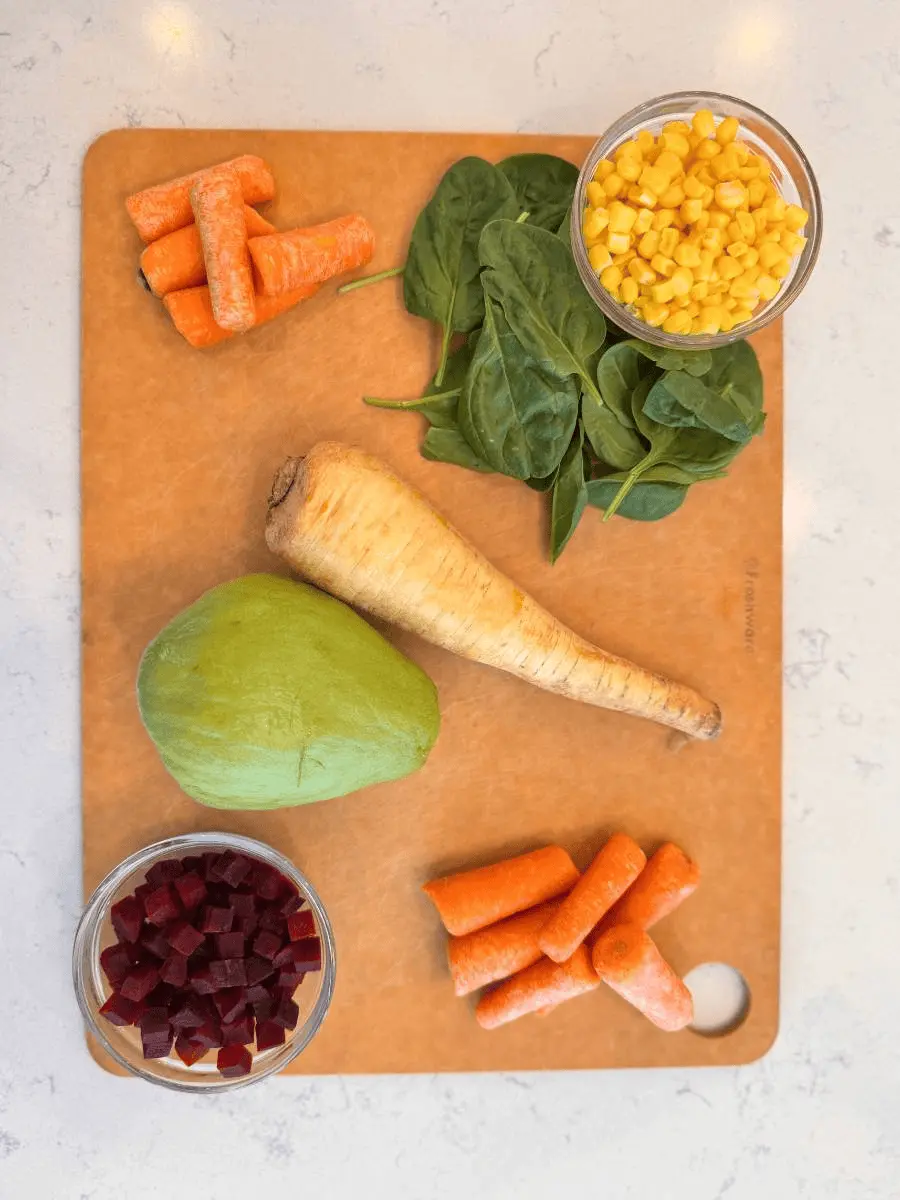
Instead of soda, we drink water or low-sugar juice. My mom eats lots of fruits and vegetables, especially mushrooms and celery, which I used to hate. But now, I eat them too, because it feels like one small way I can help her.
Even though it’s tough, I’ve learned that the food in our home was centered on helping to maintaining stability and reducing the triggers of her symptoms. When I avoid eating things that could make her sick, I feel like I’m doing my part to protect her.
If you want to understand what a Meniere’s Disease Diet involves and why it helps, see this complete guide.
What I’ve Learned From My Mom’s Strength
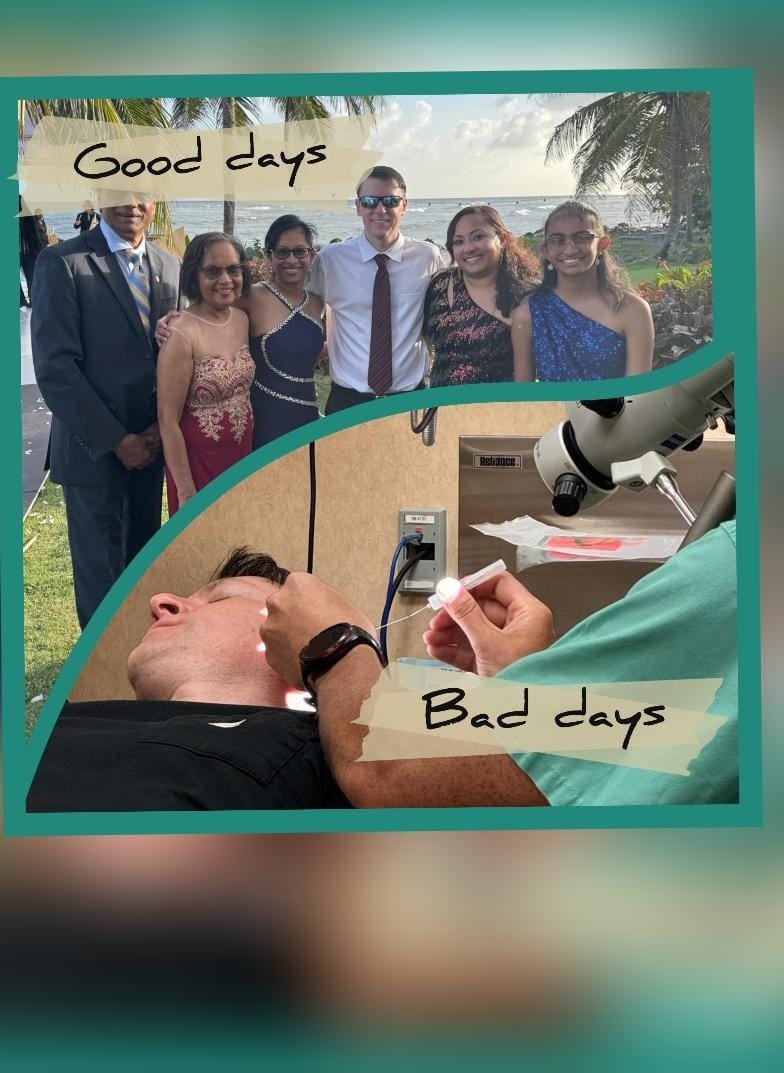
One of the hardest things about Ménière’s disease is watching how unpredictable it is. Some days my mom seems okay, she smiles, jokes, and moves around like she used to. Other days, she can’t get out of bed because the world won’t stop spinning.
What amazes me most is her strength. She never gives up, even when she’s tired or dizzy. She still asks me how school was. She still listens when I talk about my day, even if the tinnitus is so loud it is deafening.
I’ve learned from her that strength isn’t about pretending everything’s fine. It’s about facing each day, no matter how hard it is, and finding something to be grateful for.
And I’ve learned empathy, real empathy. The kind that makes you feel someone else’s pain and still choose to love harder, help more, and be patient even when you’re frustrated.
Advice to Other Kids Going Through the Same Thing
If your mom, dad, or any loved one has Ménière’s disease, I want you to know something, you’re not alone.
You might feel scared, confused, or even angry sometimes, and that’s okay. You might want to cry or scream or hide. That’s okay too. Those feelings don’t make you weak or ungrateful, they make you human.
It helps to talk. Talk to someone you trust, a friend, teacher, or another family member. Don’t keep everything inside. And remember, it’s okay to still be a kid. You don’t have to carry every burden alone.
Helping out doesn’t mean giving up the things that make you happy. You can still go for bike rides, play games, or go on walks with your parent. Sometimes, even sitting quietly together or watching a movie helps more than you think.
And when the bad days come, remind yourself that you and your parent are a team. The disease might be strong, but love and patience are stronger.
How the Ménière’s Disease Diet Became Part of Our Family Routine
Over time, the low-salt diet stopped feeling like a punishment and started feeling like a lifestyle. We discovered new recipes that fit her needs but still tasted good.
Now, we make smoothies with fresh fruits instead of sugary drinks. We bake snacks instead of frying them. We season food with herbs instead of salt. It’s healthier for all of us, and it gives me comfort knowing I’m doing something to help her feel better.
At first, the changes were overwhelming, but once we got used to it, things felt more manageable. We even have fun experimenting with new meals now, turning something difficult into something creative.
It’s like we’re fighting the disease together, one healthy meal at a time.
Finding Light in the Darkness
There are moments when I feel sad, really sad. But there are also moments when I feel hopeful.
When my mom laughs, when she feels strong enough to take a walk with me, when she tells me she’s proud of how understanding I’ve been, those moments mean everything. They remind me that even though the disease has taken some things away, it hasn’t taken away love.
And love, I’ve learned, can make even the hardest days a little brighter.
A Message to Parents With Ménière’s Disease
To all the parents who have Ménière’s disease, your kids see more than you think. We see your pain, your courage, and your effort to keep going. Even when you think you’re hiding it, we notice. And even when we don’t know what to say, we care deeply.
Sometimes, we may act distant or frustrated, but that’s just because it hurts to see you suffer. What helps us most is when you talk to us about it, when you help us understand what’s happening instead of trying to protect us from it.
We don’t need you to be perfect. We just need you to be real.
Conclusion
Ménière’s disease changed my family’s life forever. It brought fear, sadness, and frustration, but it also brought understanding, closeness, and love.
It taught me what it means to care for someone deeply, to be strong when life feels unfair, and to find light even when everything feels dark.
If you’re a kid going through something like this, remember: you don’t have to fix it all. Just being there, listening, helping, loving, is more than enough.
And if you’re a parent fighting Ménière’s disease, know that your child loves you more than words can say. Your battle is their inspiration.
So even when the world spins and the noise seems unbearable, hold onto that love. Because in the end, love is what steadies the room.